

A green lawn and thriving garden start with one thing: water. But, it has to be the right amount, at the right time, in the right way. Here on the South Shore, our sandy soils, coastal breezes, and unpredictable summer dry spells make watering a little different than it is inland. Below are our go-to tips to help your landscape stay lush all season long, plus how we can take the guesswork out of it entirely.
Aim for between 4 a.m. and 9 a.m. The science is simple: midday heat and wind can evaporate a large share of your water before it ever reaches the roots, so you end up paying for water the sun steals. Mornings are cooler and calmer, so more of every drop soaks in. Watering early also gives the grass blades all day to dry off. That matters because lawn diseases like brown patch and dollar spot thrive on leaves that stay wet for long stretches, which is exactly what happens when you water in the evening and the moisture sits overnight.
Think of morning watering as feeding the roots and protecting the blades at the same time.


A long, deep soak two or three times a week beats a light sprinkle every day, and here is why. Roots grow toward water. When you water deeply, moisture penetrates six to eight inches down, and the roots chase it, building a deep, resilient system that can pull moisture from a larger reservoir of soil. Light daily sprinkles only wet the top inch, training roots to stay shallow where they dry out fast and bake in the summer heat.
Picture two lawns side by side in a July dry spell: the deeply watered one stays green for days between waterings, while the shallow-watered one wilts within hours of the sprinkler shutting off.
Deeper roots mean a tougher, more drought-proof lawn that needs less attention from you.
The South Shore’s sandy soils drain fast and dry out quicker than the clay soils found closer to Boston. Sand has large particles with big gaps between them, so water rushes straight through rather than clinging to the soil the way it does in dense, fine-particled clay.
The practical effect: a watering schedule that keeps a Duxbury lawn happy can leave a Plymouth or Marshfield lawn thirsty. Sandy soil may call for slightly more frequent watering, but always check before you water again.
An easy test is to push a screwdriver into the lawn; if it slides in easily, there is still moisture down there, and if it stops short, it is time to water. Adding compost over time also helps sandy soil hold water longer.

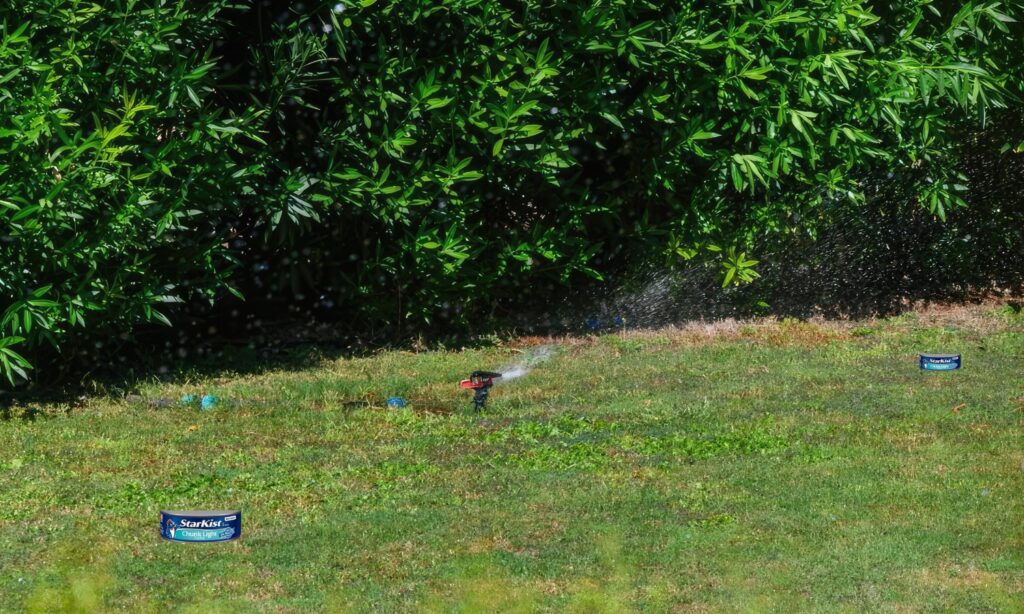
Most lawns want roughly one inch of water per week, including rainfall. That figure is not arbitrary: about an inch is what it takes to wet the soil down to the root zone of a typical cool-season lawn, which is the depth those roots actually drink from. More than that mostly drains past the roots and is wasted, and on our sandy South Shore soils it drains even faster.
A simple trick to measure it: set out a few empty tuna cans across the lawn while you water and stop once they fill to about an inch. This also reveals whether your sprinklers cover evenly, since you will often find one can full and another barely wet. A rain gauge lets you track Mother Nature’s contribution so you can subtract it from what you add.
Different plants drink differently, so one setting rarely fits all. Garden beds and shrubs usually prefer a slow soak at the base rather than overhead spray, which delivers water straight to the roots and keeps foliage dry to discourage mildew and leaf spot.
Containers are a different animal entirely: with so little soil to hold moisture and surfaces exposed to sun and wind on all sides, a hanging basket or pot can dry out in a single hot afternoon and may need watering once or even twice a day in midsummer.
Newly installed plants and fresh sod are the thirstiest of all because their roots have not yet spread into the surrounding soil. Until they establish, usually over the first few weeks, they depend almost entirely on you to keep that small root ball consistently moist.

The smartest watering rule is to skip it when rain is on the way, since an inch from a passing storm does the same job as an inch from your sprinkler, for free. Your lawn will also tell you what it needs if you know the signs. When grass is well hydrated, the blades are firm and spring right back; when it is thirsty, it loses that turgor and footprints linger instead of bouncing back, and the color shifts from vibrant green to a dull blue-gray. Those are your cues to water.
One thing not to panic over: a golden-brown lawn in mid-summer usually isn’t dead. It’s dormant, a natural survival mode where the grass conserves energy at the crown and waits out the heat, then greens back up when cooler temperatures and fall rains return.
A two-to-three-inch layer of mulch around plants and beds is one of the easiest ways to cut your watering in half. It works by acting like a blanket over the soil: it blocks the sun from baking the surface, slows evaporation, and keeps the root zone cooler and more consistently moist between waterings.
As a bonus, mulch smothers weeds that would otherwise compete with your plants for water, and as organic mulch breaks down it improves the soil’s ability to retain moisture, which is especially valuable in our fast-draining sandy ground. Just keep mulch pulled back a couple of inches from plant stems and tree trunks, since piling it against them traps moisture where you don’t want it and can invite rot.

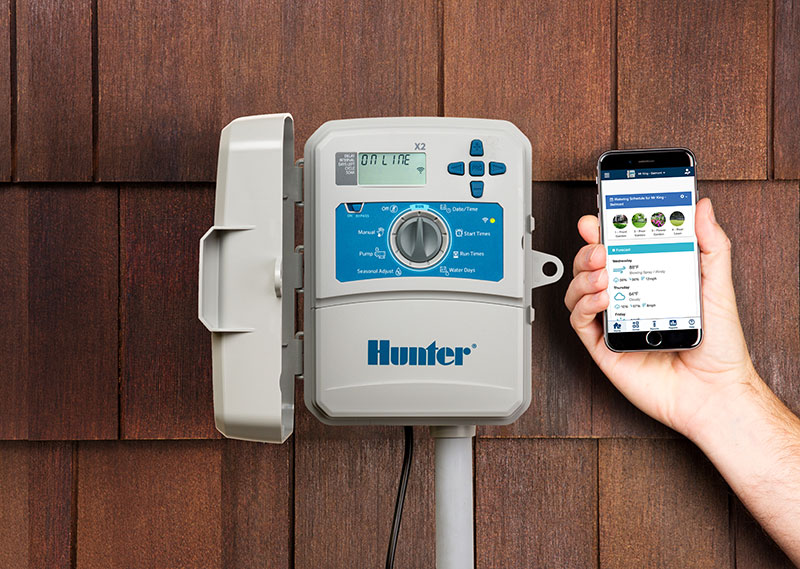
Want to stop guessing altogether? We install Wi-Fi smart irrigation controllers that bring precision watering to your fingertips. A smart controller can:
Some Massachusetts communities even offer rebates on smart irrigation controllers, so the upgrade can pay for itself. If you’d like to make watering effortless, our irrigation team would be glad to help.
Summer water-use restrictions are common across the South Shore, and they can change quickly based on drought conditions. As of early summer 2026, Massachusetts entered the season without statewide restrictions in place, but towns regularly enact their own seasonal rules, and conditions can tighten fast.
A few things to keep in mind:
A smart irrigation controller makes compliance easy. You can program it to match your town’s allowed days and hours and update it in seconds if the rules change.
From everyday watering questions to a fully automated smart irrigation system, the Egan Landscape Group team has the South Shore covered. Reach out to learn how we can keep your lawn and garden thriving all season long.