

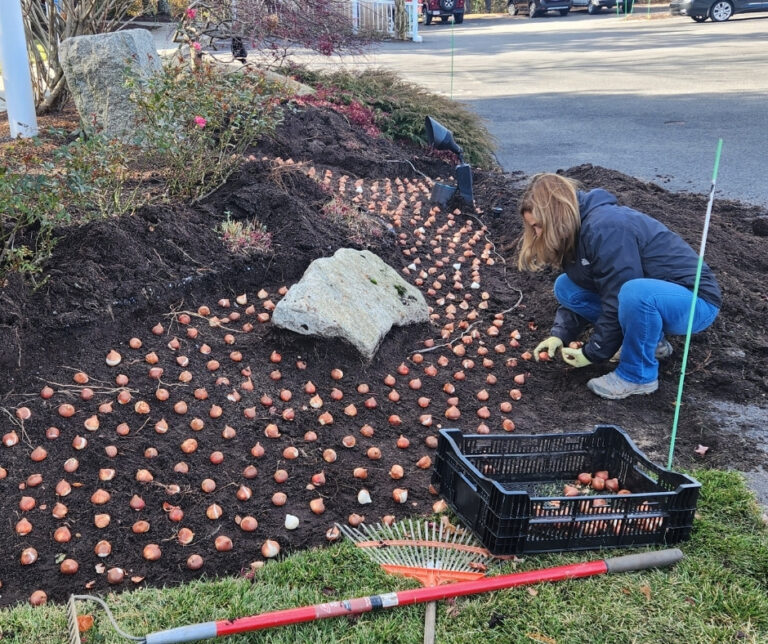
While the rest of the world was retreating indoors last November, the Egan Landscape Group team was busy burying a masterpiece beneath the frost line. For homeowners and visitors in The Pinehills, a breathtaking spring landscape isn’t a stroke of luck, it’s a calculated investment made months in advance. We spent the autumn days installing thousands of premium tulip bulbs, knowing that while they spent the winter tucked under a heavy blanket of New England snow, they were secretly preparing for their grand debut. When the thaw finally arrived, those dormant bulbs transformed the community into a vibrant, living gallery of color.
Last fall, the Egan Landscape Group team spent days in The Pinehills, mapping out soil depths and ensuring each bulb was perfectly positioned for success. Once the ground froze and the first flakes fell, these tulips were tucked under a thick, insulating blanket of snow.
While it looked like nothing was happening on the surface, that cold period is actually essential. Tulips require a process called vernalization, a fancy way of saying they need a “cold snap” to trigger their internal clock to bloom when the ground finally warms up.
You might wonder: What exactly are those bulbs doing under the frost line all winter? It’s more active than you think!
Tulips aren’t just beautiful; they’re actually quite “smart” plants. Here are a few things you might not know:
Thirsty Travelers: Tulips are “heavy drinkers” in a vase; they use water to maintain cell pressure to stand upright, so you’ll likely need to refill their water daily to keep them from drooping.
Color Pigment Mixology: Their vibrant hues come from two main types of pigments: carotenoids (for yellows and oranges) and anthocyanins (for reds and purples). The specific combination and concentration of these pigments within the petals determine every shade you see.
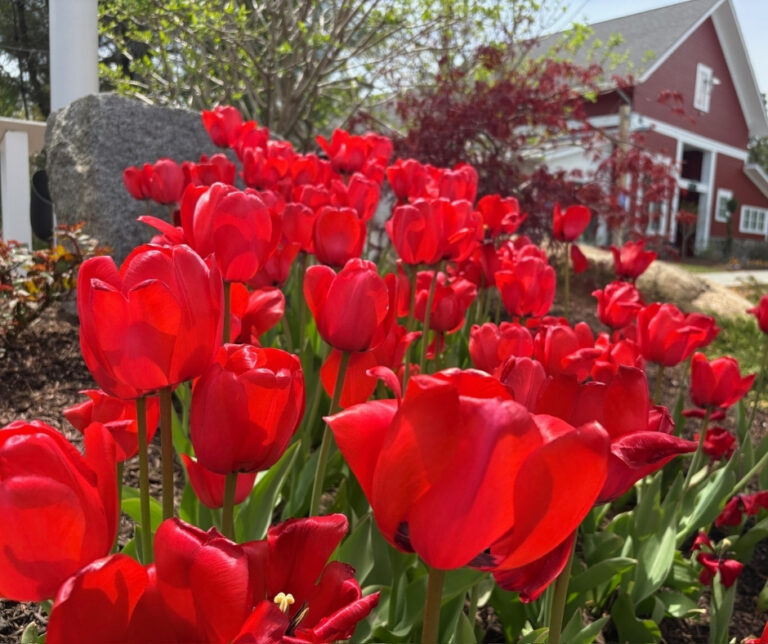
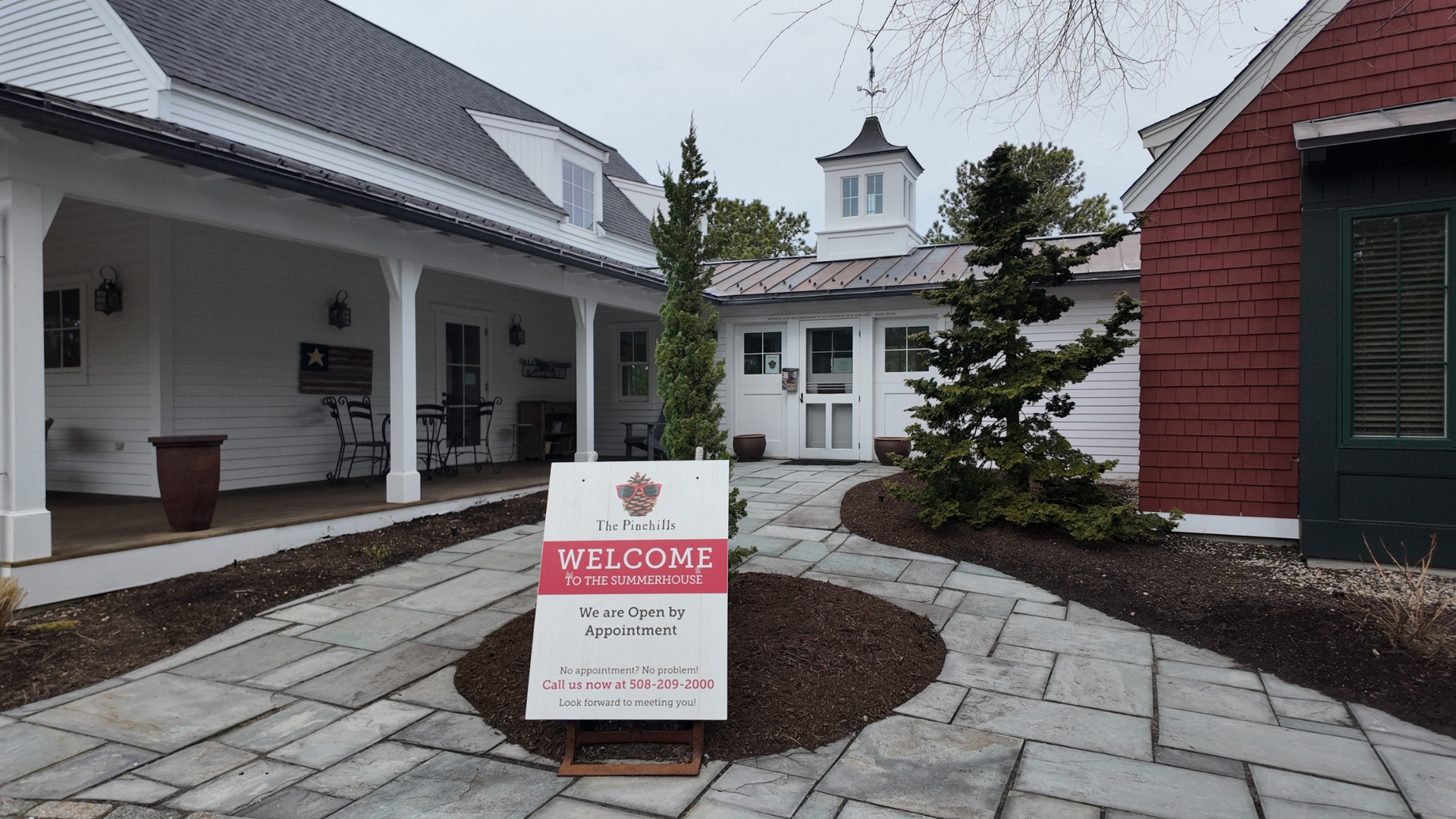
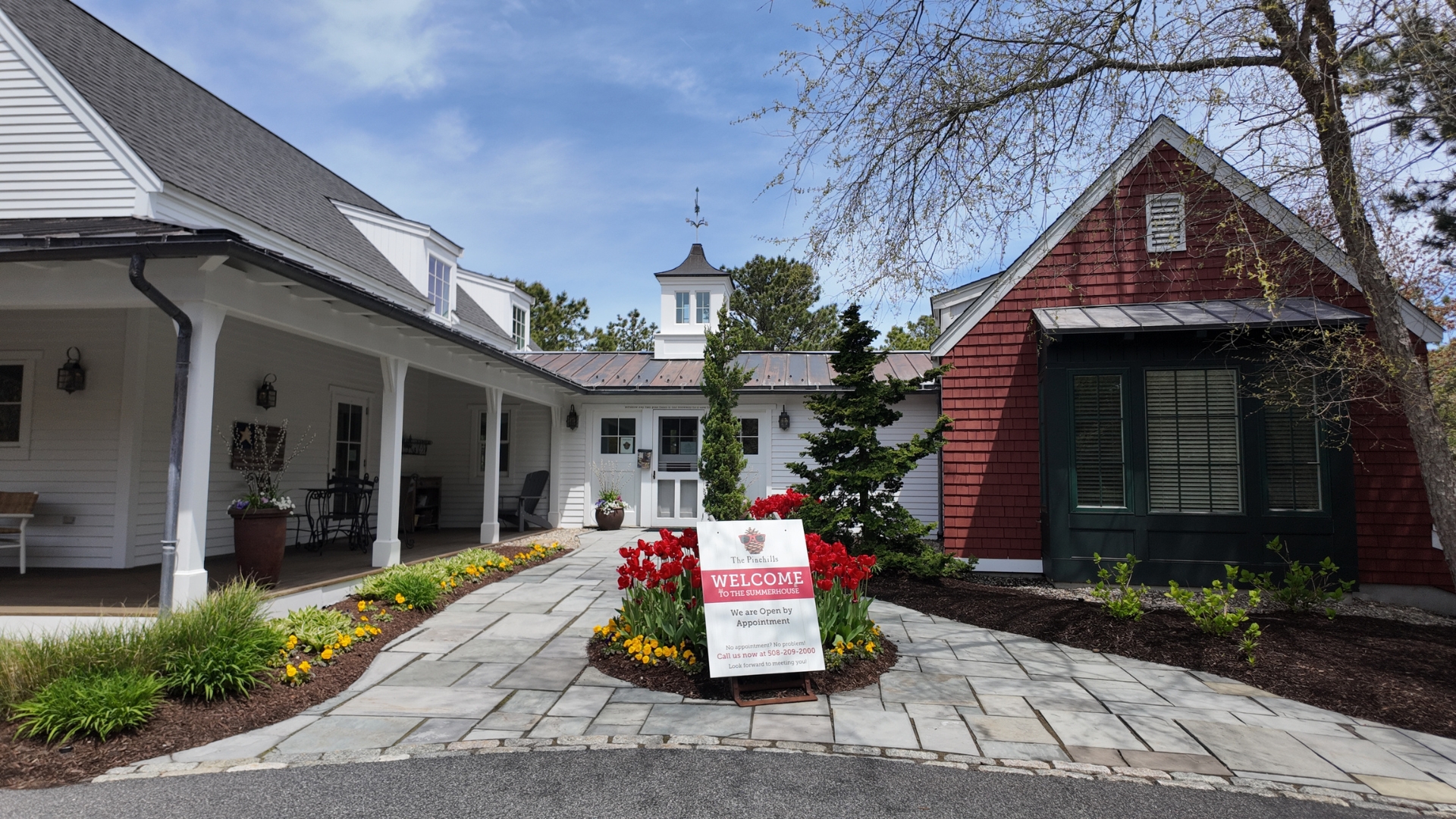
The stunning displays you see throughout The Pinehills don’t happen by accident. Successful tulip displays require the right soil pH, proper drainage (to prevent bulb rot), and protection from local “critters” who might think the bulbs are a snack. If you’re interested in learning more about our plant installations, click the button below to get in contact with us!