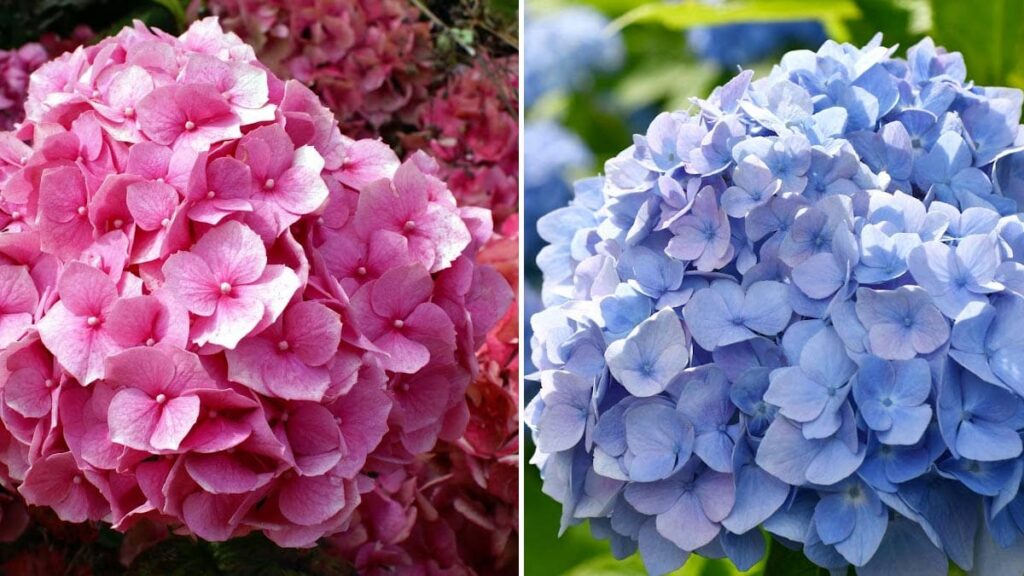
If there’s one plant that says “New England summer,” it’s the hydrangea. From the classic blue mopheads on Cape Cod to the cone-shaped panicle varieties lining South Shore driveways, hydrangeas are some of the most rewarding (and most asked-about) shrubs we care for. They’re also some of the most misunderstood. Pruned at the wrong time, planted in the wrong spot, or fed the wrong fertilizer, a hydrangea can go from showstopper to disappointment fast.
This guide covers what actually works for hydrangeas in our climate: when to prune, how to get blue or pink blooms, watering and sun guidance, and winter protection. We’ve also pulled in some hands-on advice from our Nursery Manager and put together a look at the hydrangea varieties currently being cared for at Egan Wholesale Group, right here on site at Egan Landscape Group, waiting to be adopted into their new homes.
Understanding Your Hydrangea Type
Before you prune, fertilize, or worry about flower color, you need to know which type of hydrangea you’re working with. New England gardens typically grow four main types, and each one plays by different rules.
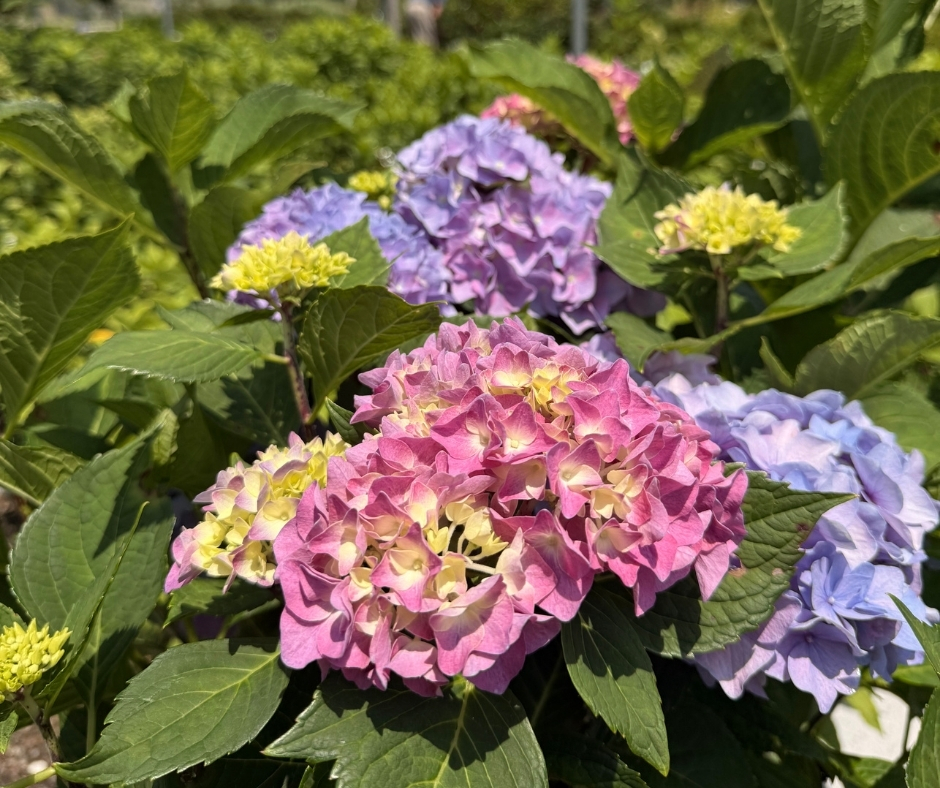
Bigleaf hydrangeas (Hydrangea macrophylla) are the classic mophead and lacecap varieties known for blue or pink blooms. They bloom on old wood (last year’s growth), which is why winter protection and pruning timing matter so much for this group.
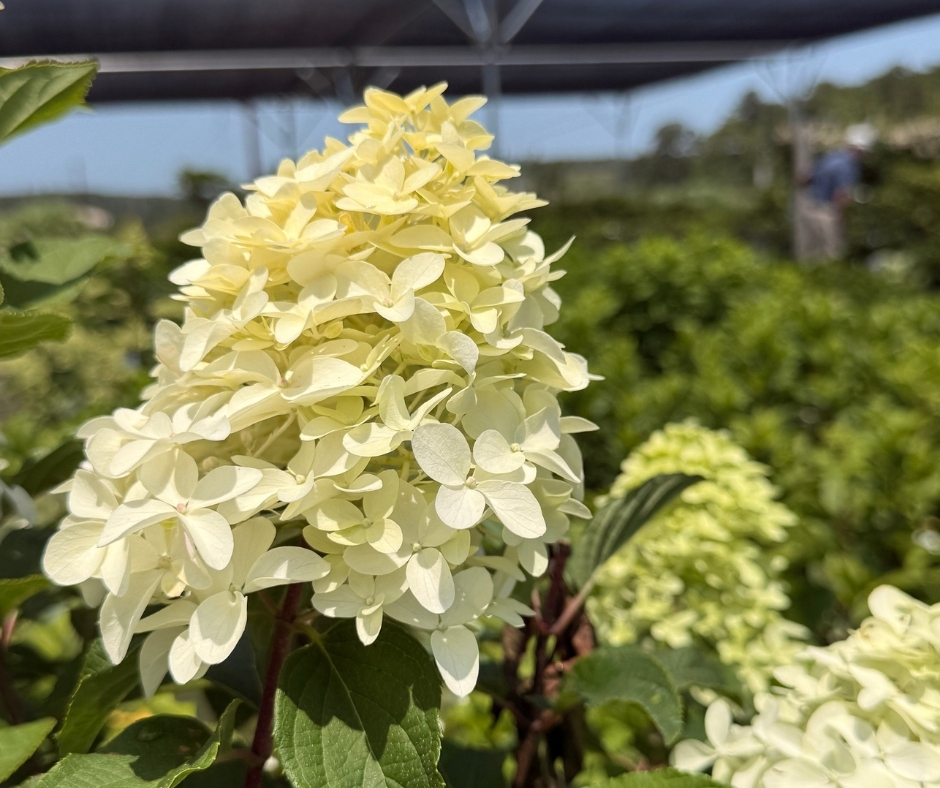
Panicle hydrangeas (Hydrangea paniculata) produce the cone-shaped blooms that start white or lime green and age to pink or burgundy. They bloom on new wood, making them the most forgiving and cold-hardy option for our region.
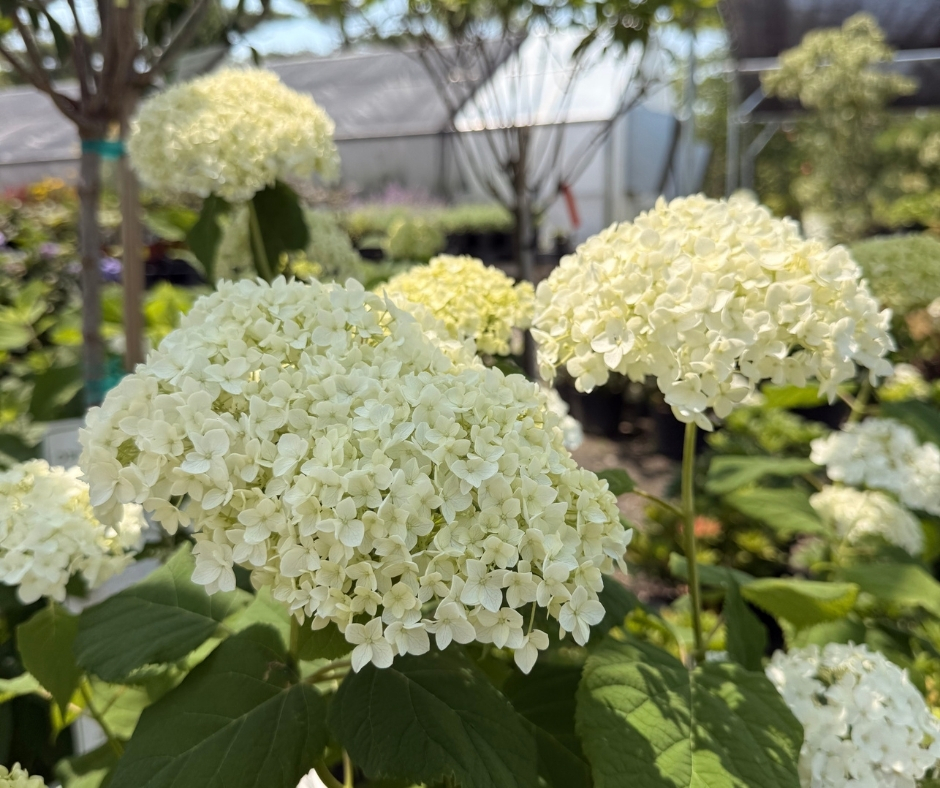
Smooth hydrangeas (Hydrangea arborescens), including the popular ‘Annabelle’ type, also bloom on new wood and produce large, round white blooms. They can be fragile, meant for more shady, not exposed sites.
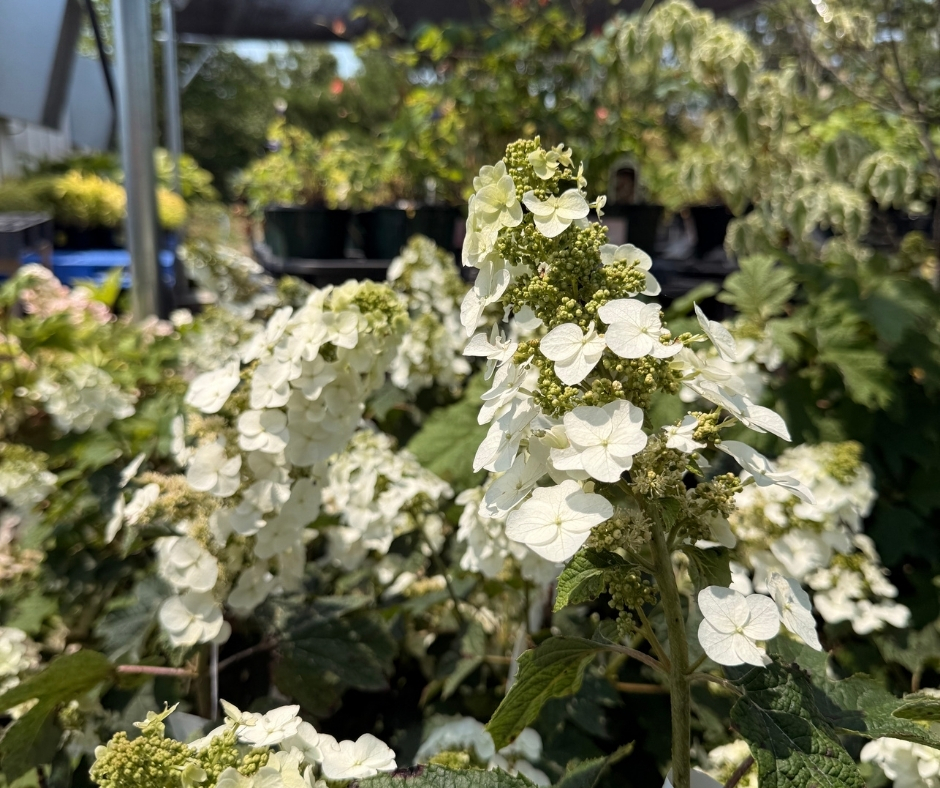
Oakleaf hydrangeas (Hydrangea quercifolia) are grown as much for their foliage as their blooms, with deeply lobed leaves that turn deep red and burgundy in fall on top of elongated white flower panicles.
Let Our Account Managers Help You Pick the Perfect Variety (and Get It Planted)
Choosing a hydrangea isn’t just about flower color, it’s about knowing how big that plant is going to get and whether it fits the space you have in mind. A ‘Limelight’ panicle hydrangea can reach 6 to 8 feet tall and wide at maturity, while a compact variety like ‘Little Lime’ or ‘Bobo’ tops out closer to 3 to 4 feet.
That’s where our account managers come in. They’ll meet you on your property to talk through sun exposure, soil conditions, and how much room you have to work with, then put together variety recommendations that fit both the look you want and the mature size that makes sense for the spot. Once you have a shortlist, you can visit the nursery to see those exact plants in person before anything goes into the ground!
From there, our installation crews take over, planting at the right depth, in properly amended soil, exactly where your account manager mapped it out. That means correct technique, the right pH adjustments for bigleaf varieties chasing blue or pink blooms, and a watering plan to get the roots established.
Ready to get planting? Schedule a visit with one of our account managers. They’ll help you pick the right hydrangeas and get them settled into their new home.
Getting Blue or Pink Blooms
For bigleaf hydrangeas, flower color is tied to soil pH and aluminum availability, not the plant variety itself.
Acidic soil (pH below 6) with available aluminum produces blue blooms.
Alkaline soil (pH above 7) produces pink blooms.
Neutral soil often produces a muddier purple or lavender shade.
Soil sulfur or aluminum sulfate can lower pH for bluer blooms, while garden lime raises pH for pinker tones. White-blooming varieties and most panicle and smooth hydrangea types are not affected by soil pH, since their color comes from the variety itself, not aluminum uptake.
Ask the Nursery Manager: Kim’s Top Hydrangea Advice
We sat down with Kim, our Nursery Manager at Egan Wholesale Group, for the advice she gives customers most often.
“The number one thing I tell people is patience. A hydrangea that just went into the ground this spring is not going to look like the one on the tag for at least a season, sometimes two. The roots are doing the work underground before you see it up top.
If you’re planting a bigleaf variety and you’ve had bloom problems in the past, that’s almost always a winter bud issue, not a watering or soil issue. I always recommend the reblooming types for anyone who’s been frustrated with a hydrangea that won’t flower. They give you a second chance even after a rough winter.
And don’t be afraid to ask us what type you have before you start pruning. That’s the question I get the most, and it’s the one that saves the most heartbreak come June.”
Explore our current selection of beautiful hydrangeas by clicking the link below. We have a variety of colors and cultivars ready for your next landscape project!